I am not planning to leave the house before eight today. Everything goes according to plan: coffee brewing in the pot, an open sandwich with cheese, the bag by the door. Anders is still asleephis shift starts in the evening, he only gets up at one. I pull on my coat, grab the trash bag and step out.
By the bin I meet my neighbor Kirsten from the third floor. She carries a cardboard box and clearly wants to talk. Kirsten always wants to talkthat has been her main activity since retiring six years ago.
“Have you heard?” she says solemnly, without greeting me. “They finally repaired the camera. The building manager posted a notice yesterdaynow everything is recorded and stored. Two weeks of storage.”
“Good,” I say distractedly. “About time.”
“About time,” she repeats with satisfaction. “Remember in October when a bicycle was stolen from the first floor? Nothing came of it. Camera not working, they claimed. Now it works. Let them try.”
I nod, drop the trash and head for the metro. Along the way I think about the client meeting, the invoice due before lunch, stopping at the pharmacy for vitamins. The camera slips my mind at once.
I remember only at four in the afternoon. Standing at the supermarket checkout, sliding items onto the belt, something suddenly stabs. Quiet but clear. I freeze with the milk carton in my hand.
The camera.
Anders rises at one. He steps onto the landing for a smokenot inside the flat, I banned that. Everyone in the building knows. He goes out at one fifteen at the latest. Every day. We have lived here five years and nothing has changed.
But today he has the day off.
I set the milk on the belt and reach for my phone.
He does not pick up. I try againlong tones, then voicemail. I pay, leave the shop and call once more. Nothing.
“He is sleeping,” I tell myself. Evening shift, late night, now resting.
Yet I walk toward the metro quicker than usual.
*
Our building is a nine-story block from 1983. The lift works only half the time, the stairwell smells of paint and old wood. The camera sits above the entrancesmall, black, easy to miss. A red light used to blink above it, then stopped. We all grew used to it being broken. Last summer someone smashed the mailboxes on the ground floor and tried to involve the police to check the footage. They were told the camera was off, nothing recorded. Nothing was found. No one has expected much since.
I enter and glance up by habit. The red light glows.
Steady, calm, no flicker. Just on.
I climb to the fourth floor on foot, skipping the lift. The landing is still. Keys out, door open.
Strange shoes stand in the hallway.
Not quite strange. I have seen them before. Light brown suede, size forty-three. They sit beside Anders’ slippers, toes perfectly aligned, as if placed with care.
I remain in the doorway ten seconds. Simply stand and stare.
Then I remove my coat, hang it on the hook, set the groceries down. Everything done slowly, deliberately.
No sound from inside.
I move to the kitchen, fill the kettle, sit on the stool. My hands rest on the table and I study them like they belong to someone else. Long fingers, silver ring with a small stone on the left handAnders gave it on our third anniversary. We spent three days in Aarhus then, in a small hotel by the harbor, strolling the waterfront. He bought the ring in a jewelry shop on the main streetI admired it in the window but said no more. He remembered.
The kettle boils. I stand, pour water into the mug, add the teabag. Every motion careful, as though handling something fragile.
Mug in hand, I return to the hallway.
“Anders,” I say softly.
Silence.
“Anders, I am home.”
Something shifts behind the bedroom door. The bed creaks. Then rustling, a pause, another sound I cannot name yet understand at once.
The door opens.
Anders appears in a vest and tracksuit bottoms, hair messy, gaze sliding past me. I notice that avoidance immediately. He always met my eyes directly; that was among the first things I noticed about him. Straight, open. Now he looks aside.
“You are early,” he says.
“Yes,” I answer. “Finished sooner.”
“I was asleep.”
“I can tell.”
Silence. I sip tea and watch him. He stays in the doorway, unmoving.
“Jens dropped by,” he says at last. “Called from the car, I let him in. We talked, then he lay down.”
“Right,” I say.
“What is wrong?”
“Nothing.”
He passes me into the kitchen, opens the fridge, takes water.
“Jens!” he calls toward the bedroom. “Come out, Freja is back!”
Another creak. Pause. Then Jens emergesJens, who has worked with Anders at the same firm for six years. I know him from company events and Anders’ birthday last year. Tall, fair-haired, slightly stooped. He looks freshly woken now: red eyes, creased cheek.
“Hi, Freja,” he says. “Sorry for this. Popped in on Anders, we nodded off.”
“Fine,” I reply.
Both men watch me. I stare into the mug.
“Right then,” Jens says. “I had better go. Things to do.”
“Sure,” Anders answers. “See you.”
Jens moves to the hallway, rustles about, and the front door closes.
We are alone.
Anders pours water, drains the glass, sets it in the sink.
“Why so quiet?” he asks.
“Thinking.”
“About what?”
I place the mug on the table.
“Listen,” I say. “You know the entrance camera has been fixed?”
He stops speaking. Something crosses his face fast and faint. He sets the glass on the sink rim louder than needed.
“No,” he says. “Did not know.”
“This morning. Kirsten mentioned it.”
Pause.
“And?” he asks.
“Nothing,” I say. “Just wanted to mention it.”
*
I do not make a scene. Not for lack of words. I have plentya collection gathered over the past six months. Small oddities noticed and set aside. Phone face down, always, not occasionally. Evening shifts far more frequent than before. Replies to messages come laterhalf an hour, an hour, yet I register each delay. A scentnot aftershave, something else, faint, unnamed yet familiar.
In June he once returned late and claimed work had held him. I asked nothing. Simply set a plate on the table and moved to another room. Lay on the sofa wondering if I was paranoid. Perhaps fatigue or stress, all imagined.
I rose and checked his jacket. Found nothing. That brought no peaceI understood the act of checking itself mattered. Ordinary people do not search others’ pockets.
I avoided a scene because I needed time to think.
That evening Anders leaves for his shift. I sit in the kitchen with the laptop, pretending to work. Around nine I message my friend Hanne: “Can you talk now?”
She rings three minutes later.
“What happened?”
I describe the shoes, how he emerged from the bedroom, his claim of sleeping, the camera.
Hanne listens without interrupting. That is why I value her above the restshe hears fully, no inserted stories of her own.
“Are you certain?” she asks when I stop.
“No,” I admit. “Not certain.”
“There you go.”
“But the shoes stood exactly like that. Toe to toe. Neat. No one arranges shoes that way for a casual chat with a friend.”
Hanne stays quiet.
“That proves nothing,” she says.
“I know.”
“You might be mistaken.”
“I know, Hanne. I understand I might be wrong. Yet I looked at those shoes and realized I already know. I need no proof. I simply know.”
“A feeling is not proof.”
“I know.” I pause. “Sometimes a feeling is sharper than any proof.”
“What will you do?”
“I do not know yet. Probably speak with him.”
“When?”
“Not today.”
We continue a little longer about nothing, the kind of talk that delays hanging up. Then Hanne says, “Above all do not stay silent. Talk to me if it hurts.” I promise.
*
He returns at half past eleven. I lie in bed with a book. He glances in, says “not asleep”statement, not questionthen showers. Returns, settles beside me, reaches for his phone.
I read and fail to read. Words appear yet form no sense. The same line four times over.
“Freja,” he says into the dark.
“What?”
“Are you angry?”
“No.”
Pause.
“Truly?”
“Truly.”
He turns onto his side. Minutes later his breathing evenssleep or pretense.
I stare at the ceiling. White, with a small crack in the left corner from last autumn. Anders said it needed filling. It remains.
I am thirty-four. Married eight years. I remember our first visit to this flatempty then, old striped wallpaper on the walls. How I insisted the paper must change before furniture arrived. How he laughed and called wallpaper trivial, sunlight through the windows the real point.
I remember painting the bedroom walls. Paint splashed him; he walked about with a white mark on his temple. How I laughed. How he laughed back.
I remember our first real quarrelhis mother, money. Three days without speech, awful in one flat. On the fourth he placed a packet of my favorite tea on the kitchen table without a word. I said nothing either. We sat, drank tea, began speakingfirst carefully, then freely.
All of that existed. None of it vanished.
Yet the shoes existed too.
*
Next day I ring the building management.
“Hello,” I say. “I live at Nørrebrogade 12, fourth floor. You repaired the entrance camera yesterday.”
“Yes,” the voice confirms. “Something wrong?”
“No. I just need to knowdoes footage from the last day get kept?”
“It does. Fourteen days stored.”
“Thank you.”
I hang up.
Then lift the phone again and call Anders.
“Hello?” he answers at once.
“Hi. Where are you?”
“At work. Anything wrong?”
“No,” I say. “Nothing wrong. Listen, remember I mentioned the entrance camera yesterday?”
A pause, brief yet distinct. I feel it sharply, as if marked.
“I remember.”
“Recordings are kept two weeks. I just learned.”
Longer silence than required for a simple reply.
“Understood,” he says at last.
“Yes,” I say. “Understood.”
His breathing reaches mesteady, deliberate, the kind someone forces when trying not to betray unease.
“Freja,” he says.
“Not now,” I cut in. “We talk this evening. At home.”
I end the call.
I sit holding the phone several minutes more. Fine rain hangs outside, not falling properly, suspended in air. I watch it and realize I never needed the footage. I needed precisely that pause, that silence stretched too long.
*
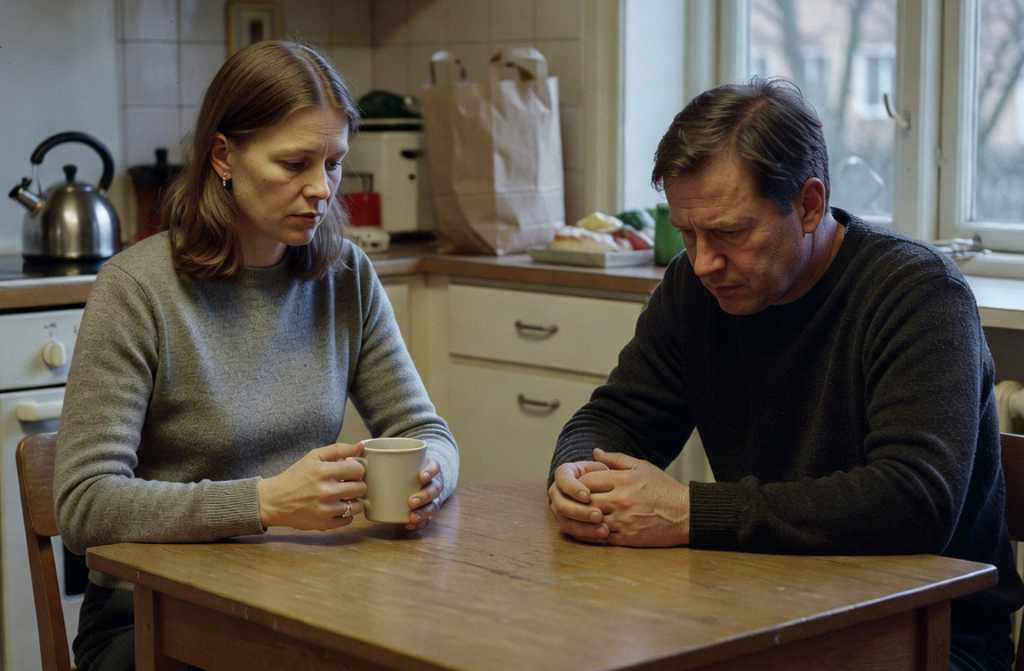
He arrives early, quarter to seven, before I have eaten. Sets down his bag, removes his shoes, comes to the kitchen. I sit with tea.
He takes the opposite chair. No warm-up, no small talkjust sits and meets my eyes.
We remain silent perhaps three minutes. I measure them by the shifts in his face. First closed, then weary, then something else I cannot name cleanly.
“It has been going on a while,” he says.
“How long?”
“Seven months.”
I nod. Seven monthsFebruary onward. I try recalling February. We visited his parents for the holidays. He brought flowers on the eighth of March, a large bunch of yellow tulips. I kept them on the windowsill days afterwardbeautiful, vivid, alive. Seven months.
“Who is she?”
He gives a name. I do not know it.
“She works with you?”
“No. We met by chance.”
“By chance,” I repeat.
He stays quiet. Offers no explanations, searches for no phrasessimply silent, and that silence feels truer than speech.
“Did you plan to tell me?” I ask.
“I do not know. I thought about it. Did not know how.”
“And now?”
“Now there is no choice.”
“Because of the camera.”
He lifts his eyes.
“No,” he says. “Not only that. Even without it… Freja, I could not keep going. I could not bear it myself. Living beside you like this, knowing that…”
“But you kept going seven months.”
“Yes.”
The quiet grows so complete I hear the bathroom tap dripping. Long overdue for repair. Small regular sound: drip, pause, drip.
“Do you want her?”
He does not answer immediately. I study his face and know every line by hearteach wrinkle, each fold at the eyes. Those lines appeared three years ago. I recall him studying the mirror, joking about age while I laughed. Now the lines look new.
“I do not know what I want,” he says quietly. “That is the truth. I am not dodging. I truly do not know.”
“That is a poor answer.”
“I know.”
“Anders.” I speak his name slowly, testing its sound. “You understand this is not simply ‘I do not know’? It demands an answer?”
“Yes. I do.”
“And?”
He gazes at the table.
“I do not want her,” he says. “It was something else. Nothing I could weigh against you. I am not comparing. There it was different.”
“But you went there seven months.”
“Yes.”
“What made it worth that?”
He stays silent a long while.
“Easy,” he says at last. “It was simply easy. No obligations, no weight. Meet, separate. No expectations either way. Like… ” He hesitates for the word. “Like air somewhere else.”
“And here nothing to breathe?”
“No. Here is the real. And the real always weighs more. My own failure to manage it, not yours.”
I stand, walk to the window, stand, return. He tracks me with his eyes.
“This is what happens,” I say. “Today you go to Mads. Pack what you need for a few days and leave. I need space to think.”
“Freja…”
“I am not sending you away forever. I need several days alone. Can you give me that?”
He nods.
“All right,” he says.
He rises, enters the bedroom. I hear the wardrobe open, items folded. Quiet careful movementshe avoids noise. He returns with a small bag.
“Freja.”
“What?”
“I am sorry.”
I look at him. The regret shows plainly, no mere words.
“I know,” I say. “Go.”
*
Three days alone.
I call neither him nor Hanne nor my mother. Work, return, cook for one. StrangeI have not cooked for one in years. I misjudge portions. Always cooked for two, for three at weekends with visitors. Now half goes into a container.
First day I cleanwash floors, dust, discard what should have gone long ago. No anger, no attempt to wipe traces. Simply something to occupy the hands.
That evening I ring my mother. Not to confide, merely to speak. She talks of the garden, neighbors, a television program. I listen and note her voice unchangedwarm, slightly tired. Certain things stay the same.
Second day I call the building management again.
“Can I obtain the camera footage?”
“For what purpose?”
“I need to view yesterday’s recording. Personal.”
They explain footage releases only on formal request and under specific conditionstheft, damage, similar. Simple viewing is not allowed.
I thank them and hang up.
The recording is no longer necessary anyway. I received what I sought the day I asked Anders about the camera over the phone. Not the imageshis reaction. The pause stretched beyond normal. Breathing forced into steadiness.
I needed no recording.
I needed truth. And I received it.
On the third day I see the decision concerns me, not him. Not what he did or how it began. What I want.
I sit by the window with coffeethe usual view: street, trees, corner of the playground. Familiar, habitual. I consider: if tomorrow he is gone entirelythis shared ordinary lifewhat remains? What do I lose?
Eight years. Not mere time together but eight years that formed something specific. Flat. Daily routes. Friday film tradition. Comfortable silence without strain. He knows I cannot speak morningsfirst half hour. I know he loses bearings in large shops and grows annoyed with himself. Small accumulated knowledge of another person that becomes foundation without notice.
Can this be kept once broken? Or does it resemble a wall crackplastered over yet always present beneath?
I do not know. Yet I understand I wish to try learning.
*
Fourth day he messages: “Can I come?”
I reply: “Yes.”
He arrives evening, brings bread and milk as though returning from errands rather than leaving home. I say nothing of it. We sit in the kitchen with tea and I reflect that the weightiest parts of our life happen at this table.
“Decided anything?” he asks.
“Almost,” I say.
“And?”
I study my hands. The ring catches lamplight.
“I need to know one thing,” I say. “Is she real to you? Or was it something you cannot quite define?”
He stays silent longer than thought or word choice would require. I see him searching for honesty.
“No,” he says finally. “Not real. It was… ” He pauses. “An escape. From what, I do not know. From myself, perhaps. It was simple there. No responsibilities, nothing serious. Just easy.”
“And here it is hard?”
“Here is the real. And the real always weighs more. My inability to cope, not anything you did wrong.”
I refill my cup. My hands remain steadyI surprise myself.
“Have you ended it with her?”
“Yes.”
“When?”
“Day before yesterday.”
“So before I said come.”
“Yes.”
This matters. I cannot explain why, yet it does. He did not finish because I asked. He finished on his own, earlier.
“Good,” I say.
“Does that mean…”
“It means we can try. Not immediately. Not as though nothing occurredthis will never be, and I want you to grasp that. But try.”
He watches me. His expression holds no simple relief. Something more layered, as though he only now grasps what he nearly lost. Not in past tenseright now.
“I need something from you,” I add.
“Anything.”
“Not anything. Specifically: I want us to see a psychologist. Family counselor. Not onceseveral times. Ready?”
“Yes.”
“You answered without thinking.”
“I am ready, Freja. I mean it. Three days thinking. I have understood much.”
“What exactly?”
He looks at his hands, then me.
“I did this not because something lacked here. Something lacked in me. Some skill… to stay with difficulty. To bear what is real. I fled where it felt easy. Calling it by name, that is cowardice.”
I say nothing. He goes on:
“I need to sort this. Not to persuade you. For myself. If I do not, it repeats. Perhaps not with her. Perhaps something else. But it repeats.”
Perhaps the most honest statement of the evening.
“Good,” I say again.
We sit longer. Talk shiftsnot easy, yet different. Away from this. He mentions work, I mention a client. Small cautious talk of nothing important. Like people resuming speech after silencestarting with the ordinary.
“One more thing,” I say as he prepares to rise.
“Yes?”
“The bathroom tap. Dripping two weeks. Fix it tomorrow.”
He regards me a second. Something twitches at the corner of his mouth. Less than a smile, yet akin.
“Good,” he says. “Tomorrow.”
*
Kirsten stops me Friday by the lift.
“Have you heard?” she says with the same solemn air as a week earlier about the camera. “Camera turned off again! Technical fault, they say. Second time this month. Disgraceful! I wrote the managementthey promise repair by week’s end. We know their repairs.”
“Yes,” I agree. “Disgraceful.”
The lift arrives. I step in, press four.
“By the way, did you note the dispatcher’s number?” Kirsten calls as doors close. “I have it, I can pass it on!”
Doors shut.
I watch my reflection in the metalblurred, unclear, typical of old lifts. Thirty-four, silver ring, coat from the third shelf. Tired face, slightly creased from recent days. Ordinary face.
The camera functioned exactly one day.
One day out of eight years. One day out of nearly three thousand days lived in one flat, one building, one roof.
One dayand that proved enough.
The lift halts at the fourth floor. Doors open. I step onto the landing.
The flat is quietAnders not yet back from his shift. I remove my coat, set the kettle on, open the fridge. Shelves hold bread, milk, something in a container. Normal fridge. Normal kitchen. Normal flat.
Normal life, with a crack now visible again. Not newsimply seen.
I fill a mug and think this is often how matters stand. Neither “all well” nor “all finished”something between, where one stands and sorts through. No simple answers, yet honest questions exist.
And sometimes honest answers.
The bathroom no longer drips. Anders repaired it that morning, as promised.
That too carries meaning.I am not planning to leave the house before eight today. Everything goes according to plan: coffee brewing in the pot, an open sandwich with cheese, the bag by the door. Anders is still asleephis shift starts in the evening, he only gets up at one. I pull on my coat, grab the trash bag and step out.
By the bin I meet my neighbor Kirsten from the third floor. She carries a cardboard box and clearly wants to talk. Kirsten always wants to talkthat has been her main activity since retiring six years ago.
“Have you heard?” she says solemnly, without greeting me. “They finally repaired the camera. The building manager posted a notice yesterdaynow everything is recorded and stored. Two weeks of storage.”
“Good,” I say distractedly. “About time.”
“About time,” she repeats with satisfaction. “Remember in October when a bicycle was stolen from the first floor? Nothing came of it. Camera not working, they claimed. Now it works. Let them try.”
I nod, drop the trash and head for the metro. Along the way I think about the client meeting, the invoice due before lunch, stopping at the pharmacy for vitamins. The camera slips my mind at once.
I remember only at four in the afternoon. Standing at the supermarket checkout, sliding items onto the belt, something suddenly stabs. Quiet but clear. I freeze with the milk carton in my hand.
The camera.
Anders rises at one. He steps onto the landing for a smokenot inside the flat, I banned that. Everyone in the building knows. He goes out at one fifteen at the latest. Every day. We have lived here five years and nothing has changed.
But today he has the day off.
I set the milk on the belt and reach for my phone.
He does not pick up. I try againlong tones, then voicemail. I pay, leave the shop and call once more. Nothing.
“He is sleeping,” I tell myself. Evening shift, late night, now resting.
Yet I walk toward the metro quicker than usual.
*
Our building is a nine-story block from 1983. The lift works only half the time, the stairwell smells of paint and old wood. The camera sits above the entrancesmall, black, easy to miss. A red light used to blink above it, then stopped. We all grew used to it being broken. Last summer someone smashed the mailboxes on the ground floor and tried to involve the police to check the footage. They were told the camera was off, nothing recorded. Nothing was found. No one has expected much since.
I enter and glance up by habit. The red light glows.
Steady, calm, no flicker. Just on.
I climb to the fourth floor on foot, skipping the lift. The landing is still. Keys out, door open.
Strange shoes stand in the hallway.
Not quite strange. I have seen them before. Light brown suede, size forty-three. They sit beside Anders’ slippers, toes perfectly aligned, as if placed with care.
I remain in the doorway ten seconds. Simply stand and stare.
Then I remove my coat, hang it on the hook, set the groceries down. Everything done slowly, deliberately.
No sound from inside.
I move to the kitchen, fill the kettle, sit on the stool. My hands rest on the table and I study them like they belong to someone else. Long fingers, silver ring with a small stone on the left handAnders gave it on our third anniversary. We spent three days in Aarhus then, in a small hotel by the harbor, strolling the waterfront. He bought the ring in a jewelry shop on the main streetI admired it in the window but said no more. He remembered.
The kettle boils. I stand, pour water into the mug, add the teabag. Every motion careful, as though handling something fragile.
Mug in hand, I return to the hallway.
“Anders,” I say softly.
Silence.
“Anders, I am home.”
Something shifts behind the bedroom door. The bed creaks. Then rustling, a pause, another sound I cannot name yet understand at once.
The door opens.
Anders appears in a vest and tracksuit bottoms, hair messy, gaze sliding past me. I notice that avoidance immediately. He always met my eyes directly; that was among the first things I noticed about him. Straight, open. Now he looks aside.
“You are early,” he says.
“Yes,” I answer. “Finished sooner.”
“I was asleep.”
“I can tell.”
Silence. I sip tea and watch him. He stays in the doorway, unmoving.
“Jens dropped by,” he says at last. “Called from the car, I let him in. We talked, then he lay down.”
“Right,” I say.
“What is wrong?”
“Nothing.”
He passes me into the kitchen, opens the fridge, takes water.
“Jens!” he calls toward the bedroom. “Come out, Freja is back!”
Another creak. Pause. Then Jens emergesJens, who has worked with Anders at the same firm for six years. I know him from company events and Anders’ birthday last year. Tall, fair-haired, slightly stooped. He looks freshly woken now: red eyes, creased cheek.
“Hi, Freja,” he says. “Sorry for this. Popped in on Anders, we nodded off.”
“Fine,” I reply.
Both men watch me. I stare into the mug.
“Right then,” Jens says. “I had better go. Things to do.”
“Sure,” Anders answers. “See you.”
Jens moves to the hallway, rustles about, and the front door closes.
We are alone.
Anders pours water, drains the glass, sets it in the sink.
“Why so quiet?” he asks.
“Thinking.”
“About what?”
I place the mug on the table.
“Listen,” I say. “You know the entrance camera has been fixed?”
He stops speaking. Something crosses his face fast and faint. He sets the glass on the sink rim louder than needed.
“No,” he says. “Did not know.”
“This morning. Kirsten mentioned it.”
Pause.
“And?” he asks.
“Nothing,” I say. “Just wanted to mention it.”
*
I do not make a scene. Not for lack of words. I have plentya collection gathered over the past six months. Small oddities noticed and set aside. Phone face down, always, not occasionally. Evening shifts far more frequent than before. Replies to messages come laterhalf an hour, an hour, yet I register each delay. A scentnot aftershave, something else, faint, unnamed yet familiar.
In June he once returned late and claimed work had held him. I asked nothing. Simply set a plate on the table and moved to another room. Lay on the sofa wondering if I was paranoid. Perhaps fatigue or stress, all imagined.
I rose and checked his jacket. Found nothing. That brought no peaceI understood the act of checking itself mattered. Ordinary people do not search others’ pockets.
I avoided a scene because I needed time to think.
That evening Anders leaves for his shift. I sit in the kitchen with the laptop, pretending to work. Around nine I message my friend Hanne: “Can you talk now?”
She rings three minutes later.
“What happened?”
I describe the shoes, how he emerged from the bedroom, his claim of sleeping, the camera.
Hanne listens without interrupting. That is why I value her above the restshe hears fully, no inserted stories of her own.
“Are you certain?” she asks when I stop.
“No,” I admit. “Not certain.”
“There you go.”
“But the shoes stood exactly like that. Toe to toe. Neat. No one arranges shoes that way for a casual chat with a friend.”
Hanne stays quiet.
“That proves nothing,” she says.
“I know.”
“You might be mistaken.”
“I know, Hanne. I understand I might be wrong. Yet I looked at those shoes and realized I already know. I need no proof. I simply know.”
“A feeling is not proof.”
“I know.” I pause. “Sometimes a feeling is sharper than any proof.”
“What will you do?”
“I do not know yet. Probably speak with him.”
“When?”
“Not today.”
We continue a little longer about nothing, the kind of talk that delays hanging up. Then Hanne says, “Above all do not stay silent. Talk to me if it hurts.” I promise.
*
He returns at half past eleven. I lie in bed with a book. He glances in, says “not asleep”statement, not questionthen showers. Returns, settles beside me, reaches for his phone.
I read and fail to read. Words appear yet form no sense. The same line four times over.
“Freja,” he says into the dark.
“What?”
“Are you angry?”
“No.”
Pause.
“Truly?”
“Truly.”
He turns onto his side. Minutes later his breathing evenssleep or pretense.
I stare at the ceiling. White, with a small crack in the left corner from last autumn. Anders said it needed filling. It remains.
I am thirty-four. Married eight years. I remember our first visit to this flatempty then, old striped wallpaper on the walls. How I insisted the paper must change before furniture arrived. How he laughed and called wallpaper trivial, sunlight through the windows the real point.
I remember painting the bedroom walls. Paint splashed him; he walked about with a white mark on his temple. How I laughed. How he laughed back.
I remember our first real quarrelhis mother, money. Three days without speech, awful in one flat. On the fourth he placed a packet of my favorite tea on the kitchen table without a word. I said nothing either. We sat, drank tea, began speakingfirst carefully, then freely.
All of that existed. None of it vanished.
Yet the shoes existed too.
*
Next day I ring the building management.
“Hello,” I say. “I live at Nørrebrogade 12, fourth floor. You repaired the entrance camera yesterday.”
“Yes,” the voice confirms. “Something wrong?”
“No. I just need to knowdoes footage from the last day get kept?”
“It does. Fourteen days stored.”
“Thank you.”
I hang up.
Then lift the phone again and call Anders.
“Hello?” he answers at once.
“Hi. Where are you?”
“At work. Anything wrong?”
“No,” I say. “Nothing wrong. Listen, remember I mentioned the entrance camera yesterday?”
A pause, brief yet distinct. I feel it sharply, as if marked.
“I remember.”
“Recordings are kept two weeks. I just learned.”
Longer silence than required for a simple reply.
“Understood,” he says at last.
“Yes,” I say. “Understood.”
His breathing reaches mesteady, deliberate, the kind someone forces when trying not to betray unease.
“Freja,” he says.
“Not now,” I cut in. “We talk this evening. At home.”
I end the call.
I sit holding the phone several minutes more. Fine rain hangs outside, not falling properly, suspended in air. I watch it and realize I never needed the footage. I needed precisely that pause, that silence stretched too long.
*
He arrives early, quarter to seven, before I have eaten. Sets down his bag, removes his shoes, comes to the kitchen. I sit with tea.
He takes the opposite chair. No warm-up, no small talkjust sits and meets my eyes.
We remain silent perhaps three minutes. I measure them by the shifts in his face. First closed, then weary, then something else I cannot name cleanly.
“It has been going on a while,” he says.
“How long?”
“Seven months.”
I nod. Seven monthsFebruary onward. I try recalling February. We visited his parents for the holidays. He brought flowers on the eighth of March, a large bunch of yellow tulips. I kept them on the windowsill days afterwardbeautiful, vivid, alive. Seven months.
“Who is she?”
He gives a name. I do not know it.
“She works with you?”
“No. We met by chance.”
“By chance,” I repeat.
He stays quiet. Offers no explanations, searches for no phrasessimply silent, and that silence feels truer than speech.
“Did you plan to tell me?” I ask.
“I do not know. I thought about it. Did not know how.”
“And now?”
“Now there is no choice.”
“Because of the camera.”
He lifts his eyes.
“No,” he says. “Not only that. Even without it… Freja, I could not keep going. I could not bear it myself. Living beside you like this, knowing that…”
“But you kept going seven months.”
“Yes.”
The quiet grows so complete I hear the bathroom tap dripping. Long overdue for repair. Small regular sound: drip, pause, drip.
“Do you want her?”
He does not answer immediately. I study his face and know every line by hearteach wrinkle, each fold at the eyes. Those lines appeared three years ago. I recall him studying the mirror, joking about age while I laughed. Now the lines look new.
“I do not know what I want,” he says quietly. “That is the truth. I am not dodging. I truly do not know.”
“That is a poor answer.”
“I know.”
“Anders.” I speak his name slowly, testing its sound. “You understand this is not simply ‘I do not know’? It demands an answer?”
“Yes. I do.”
“And?”
He gazes at the table.
“I do not want her,” he says. “It was something else. Nothing I could weigh against you. I am not comparing. There it was different.”
“But you went there seven months.”
“Yes.”
“What made it worth that?”
He stays silent a long while.
“Easy,” he says at last. “It was simply easy. No obligations, no weight. Meet, separate. No expectations either way. Like… ” He hesitates for the word. “Like air somewhere else.”
“And here nothing to breathe?”
“No. Here is the real. And the real always weighs more. My own failure to manage it, not yours.”
I stand, walk to the window, stand, return. He tracks me with his eyes.
“This is what happens,” I say. “Today you go to Mads. Pack what you need for a few days and leave. I need space to think.”
“Freja…”
“I am not sending you away forever. I need several days alone. Can you give me that?”
He nods.
“All right,” he says.
He rises, enters the bedroom. I hear the wardrobe open, items folded. Quiet careful movementshe avoids noise. He returns with a small bag.
“Freja.”
“What?”
“I am sorry.”
I look at him. The regret shows plainly, no mere words.
“I know,” I say. “Go.”
*
Three days alone.
I call neither him nor Hanne nor my mother. Work, return, cook for one. StrangeI have not cooked for one in years. I misjudge portions. Always cooked for two, for three at weekends with visitors. Now half goes into a container.
First day I cleanwash floors, dust, discard what should have gone long ago. No anger, no attempt to wipe traces. Simply something to occupy the hands.
That evening I ring my mother. Not to confide, merely to speak. She talks of the garden, neighbors, a television program. I listen and note her voice unchangedwarm, slightly tired. Certain things stay the same.
Second day I call the building management again.
“Can I obtain the camera footage?”
“For what purpose?”
“I need to view yesterday’s recording. Personal.”
They explain footage releases only on formal request and under specific conditionstheft, damage, similar. Simple viewing is not allowed.
I thank them and hang up.
The recording is no longer necessary anyway. I received what I sought the day I asked Anders about the camera over the phone. Not the imageshis reaction. The pause stretched beyond normal. Breathing forced into steadiness.
I needed no recording.
I needed truth. And I received it.
On the third day I see the decision concerns me, not him. Not what he did or how it began. What I want.
I sit by the window with coffeethe usual view: street, trees, corner of the playground. Familiar, habitual. I consider: if tomorrow he is gone entirelythis shared ordinary lifewhat remains? What do I lose?
Eight years. Not mere time together but eight years that formed something specific. Flat. Daily routes. Friday film tradition. Comfortable silence without strain. He knows I cannot speak morningsfirst half hour. I know he loses bearings in large shops and grows annoyed with himself. Small accumulated knowledge of another person that becomes foundation without notice.
Can this be kept once broken? Or does it resemble a wall crackplastered over yet always present beneath?
I do not know. Yet I understand I wish to try learning.
*
Fourth day he messages: “Can I come?”
I reply: “Yes.”
He arrives evening, brings bread and milk as though returning from errands rather than leaving home. I say nothing of it. We sit in the kitchen with tea and I reflect that the weightiest parts of our life happen at this table.
“Decided anything?” he asks.
“Almost,” I say.
“And?”
I study my hands. The ring catches lamplight.
“I need to know one thing,” I say. “Is she real to you? Or was it something you cannot quite define?”
He stays silent longer than thought or word choice would require. I see him searching for honesty.
“No,” he says finally. “Not real. It was… ” He pauses. “An escape. From what, I do not know. From myself, perhaps. It was simple there. No responsibilities, nothing serious. Just easy.”
“And here it is hard?”
“Here is the real. And the real always weighs more. My inability to cope, not anything you did wrong.”
I refill my cup. My hands remain steadyI surprise myself.
“Have you ended it with her?”
“Yes.”
“When?”
“Day before yesterday.”
“So before I said come.”
“Yes.”
This matters. I cannot explain why, yet it does. He did not finish because I asked. He finished on his own, earlier.
“Good,” I say.
“Does that mean…”
“It means we can try. Not immediately. Not as though nothing occurredthis will never be, and I want you to grasp that. But try.”
He watches me. His expression holds no simple relief. Something more layered, as though he only now grasps what he nearly lost. Not in past tenseright now.
“I need something from you,” I add.
“Anything.”
“Not anything. Specifically: I want us to see a psychologist. Family counselor. Not onceseveral times. Ready?”
“Yes.”
“You answered without thinking.”
“I am ready, Freja. I mean it. Three days thinking. I have understood much.”
“What exactly?”
He looks at his hands, then me.
“I did this not because something lacked here. Something lacked in me. Some skill… to stay with difficulty. To bear what is real. I fled where it felt easy. Calling it by name, that is cowardice.”
I say nothing. He goes on:
“I need to sort this. Not to persuade you. For myself. If I do not, it repeats. Perhaps not with her. Perhaps something else. But it repeats.”
Perhaps the most honest statement of the evening.
“Good,” I say again.
We sit longer. Talk shiftsnot easy, yet different. Away from this. He mentions work, I mention a client. Small cautious talk of nothing important. Like people resuming speech after silencestarting with the ordinary.
“One more thing,” I say as he prepares to rise.
“Yes?”
“The bathroom tap. Dripping two weeks. Fix it tomorrow.”
He regards me a second. Something twitches at the corner of his mouth. Less than a smile, yet akin.
“Good,” he says. “Tomorrow.”
*
Kirsten stops me Friday by the lift.
“Have you heard?” she says with the same solemn air as a week earlier about the camera. “Camera turned off again! Technical fault, they say. Second time this month. Disgraceful! I wrote the managementthey promise repair by week’s end. We know their repairs.”
“Yes,” I agree. “Disgraceful.”
The lift arrives. I step in, press four.
“By the way, did you note the dispatcher’s number?” Kirsten calls as doors close. “I have it, I can pass it on!”
Doors shut.
I watch my reflection in the metalblurred, unclear, typical of old lifts. Thirty-four, silver ring, coat from the third shelf. Tired face, slightly creased from recent days. Ordinary face.
The camera functioned exactly one day.
One day out of eight years. One day out of nearly three thousand days lived in one flat, one building, one roof.
One dayand that proved enough.
The lift halts at the fourth floor. Doors open. I step onto the landing.
The flat is quietAnders not yet back from his shift. I remove my coat, set the kettle on, open the fridge. Shelves hold bread, milk, something in a container. Normal fridge. Normal kitchen. Normal flat.
Normal life, with a crack now visible again. Not newsimply seen.
I fill a mug and think this is often how matters stand. Neither “all well” nor “all finished”something between, where one stands and sorts through. No simple answers, yet honest questions exist.
And sometimes honest answers.
The bathroom no longer drips. Anders repaired it that morning, as promised.
That too carries meaning.